Backwash: A Thin Script Handwritten Font for Digital Branding
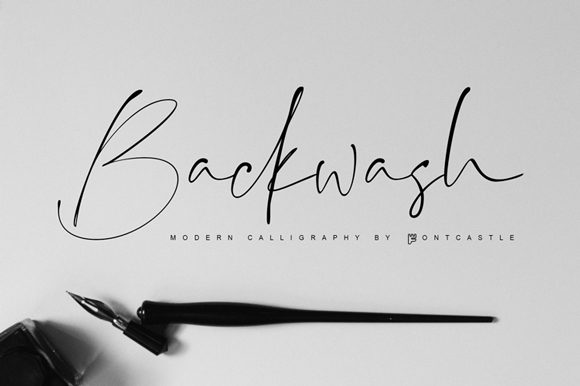
Backwash is a thin and stylish handwritten font built for designers who need expressive, human-centered typography in digital interfaces. As a Script Handwritten typeface, Backwash delivers delicate line weight, natural flow, and subtle personality—ideal for projects where warmth, authenticity, and elegance must coexist with modern web usability. Unlike heavier script fonts that overwhelm small screens or clash with UI components, Backwash’s refined thinness ensures legibility at larger sizes while retaining its organic charm. It’s not just another decorative font—it’s a purpose-built Fonts asset engineered for real-world web performance and brand cohesion.
Backwash for Hero Sections and Landing Page Headlines
Backwash shines brightest in hero sections where first impressions drive conversion. Its thin, airy strokes create visual breathing room above clean backgrounds or soft image overlays—especially effective on SaaS landing pages, coaching websites, or boutique e-commerce banners. Because it’s PUA encoded, you can access alternate glyphs, ligatures, and stylistic swashes directly in CSS or design tools like Figma, giving each headline a custom-tailored feel without manual vector editing. Use Backwash at 48–72px on desktop and scale responsively to 36px on mobile—always pair it with a neutral sans serif (like Inter or Manrope) for body copy to preserve scanning speed and hierarchy.
Backwash for Online Store Banners and Product Launch Graphics
When launching a new collection or seasonal offer, Backwash adds instant sophistication to online store banners—think Shopify homepage carousels, Etsy shop headers, or Klaviyo email hero images. Its Script Handwritten nature evokes craftsmanship and intentionality, reinforcing premium positioning for handmade goods, skincare brands, or artisanal subscriptions. Avoid using Backwash for product titles or price tags; instead, reserve it for short, emotive phrases like “Just Arrived” or “Hand-Poured With Care.” On light backgrounds, apply subtle text shadow (1px blur, #00000015) for contrast. On dark or image-based banners, use white or off-white (#f8f8f8) with letter-spacing of 0.5px to maintain rhythm.
Backwash for Creative Portfolios and Designer Brand Kits
For UI designers, web creators, and freelance developers building personal portfolio sites, Backwash acts as a tonal signature—communicating creativity without sacrificing professionalism. Use it sparingly: in the site logo (as SVG text), section dividers (“Work,” “Process,” “Contact”), or quote callouts in case study layouts. Since Backwash is a Fonts resource optimized for digital display—not print packaging or long paragraphs—it works best when supported by robust webfont loading strategies. Host it via self-hosted WOFF2 files (not Google Fonts) for full PUA glyph control and faster render times. Always test fallback behavior: define font-family: "Backwash", system-ui, -apple-system, sans-serif; in your CSS stack.
Backwash for Blog Headers and Editorial-Style Digital Content
Bloggers and content-led brands benefit from Backwash’s ability to elevate editorial tone without alienating readers. Apply it to H1s on long-form posts—especially lifestyle, wellness, or creative entrepreneurship blogs—where voice and relatability matter more than rigid formality. Its thin stroke weight avoids visual fatigue during scrolling, and the PUA encoding means you can insert contextual flourishes (like a heart glyph mid-sentence or custom ampersand) to reinforce brand voice. Never use Backwash for body text, captions under 16px, or navigation menus. Instead, pair it with a highly readable serif (e.g., Literata) for blog intros or a crisp geometric sans (e.g., Space Grotesk) for supporting headings.
Backwash for Mobile App Screens and In-App Brand Messaging
In mobile-first UI design, Backwash serves as a strategic accent—not a system font. Use it only in high-impact, static areas: onboarding welcome screens, empty-state illustrations (“No notes yet—start writing!”), or branded modals confirming subscription success. Its Script Handwritten quality signals approachability, helping reduce perceived friction in fintech, health, or education apps. For accessibility, ensure minimum contrast ratios of 4.5:1 against background colors, and avoid applying it to touch targets smaller than 44×44px. Because Backwash includes no bold or italic variants, rely on size, spacing, and color—not weight—to differentiate emphasis.
Backwash for Email Campaigns and Social Media Graphics
Digital marketers deploying Canva templates, Mailchimp campaigns, or Instagram carousel assets will find Backwash ideal for short, emotionally resonant hooks: “You’re invited,” “Limited spots open,” or “Meet your new favorite tool.” Its PUA encoding unlocks consistent glyph access across platforms—no missing characters in exported PNGs or inconsistent rendering in Outlook. Embed Backwash as outlined text in static graphics, or serve it as a webfont in responsive HTML emails (with fallbacks) for branded newsletters. Always test on iOS Mail and Gmail Android: thin fonts can appear faint if not paired with sufficient padding and background contrast.
Backwash for Commercial Licensing and Client-Facing Web Projects
As a premium Fonts license, Backwash grants full commercial rights—including use in client websites, SaaS dashboards, Shopify themes, and digital product templates sold on marketplaces like ThemeForest or Creative Market. The license covers web embedding (WOFF2/WOFF), desktop use (Figma, Sketch, Adobe), and app UI integration—no per-page fees or domain limits. Because it’s a Script Handwritten font designed for digital contexts, it avoids common licensing pitfalls like restricted social media usage or template redistribution clauses. Before deployment, verify your license includes multilingual support (Latin Extended-A is standard); for non-Latin markets, pair Backwash with a compatible system font for fallback safety.